How to record a podcast with multiple cameras?
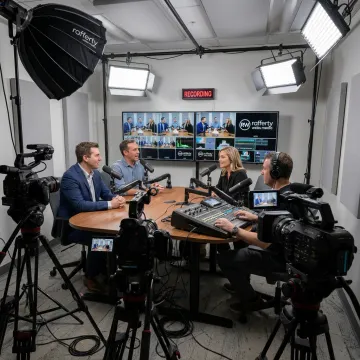
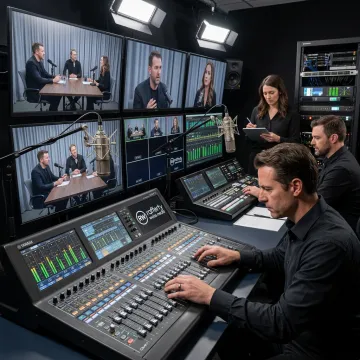
Recording a podcast with multiple cameras starts with planning camera angles for each host, guest, and wide shot. Each camera should be matched for exposure, framing, and color, while audio is captured separately with professional microphones. A producer or director monitors the recording, then the footage is synchronized and edited so the final episode cuts naturally between speakers.
What cameras do professional podcasters use?
Professional podcasters often use cinema cameras, broadcast cameras, mirrorless cameras, or PTZ cameras depending on the show format, budget, space, and desired look. The camera itself is only part of the setup. Lighting, lens choice, audio capture, monitoring, recording reliability, and post-production workflow all determine whether the finished podcast feels professional.
How many cameras do I need for a video podcast?
Most professional video podcasts use three to five cameras: one for each speaker, a wide shot of the full conversation, and sometimes additional angles for reactions or branded set details. A two-person interview can often work well with three cameras, while panel discussions or live shows may require more coverage for smooth editing.
Do you handle both video and audio production?
Yes. RaffertyWeiss Media supports both the visual and audio sides of podcast production, including camera setup, lighting, recording, professional audio capture, voiceover or narration support when needed, and editing. This integrated approach helps avoid common issues such as mismatched camera footage, inconsistent sound levels, distracting background noise, or files that are difficult to publish.
Can a multi-camera podcast be livestreamed?
A multi-camera podcast can be livestreamed when the production is designed for real-time switching, audio monitoring, and platform delivery. RaffertyWeiss Media provides live streaming support for platforms such as YouTube, Facebook, Twitch, X, or custom pages. The same production can also be recorded for later editing, republishing, and promotional clips.
How long does podcast post-production usually take?
Post-production timelines depend on episode length, number of cameras, graphics, captions, revisions, and deliverable formats. A straightforward edited episode may move quickly, while a polished branded show with social clips, title sequences, motion graphics, and multiple review rounds requires more time. A structured workflow helps keep recurring episodes consistent and predictable.
What deliverables can come from one podcast recording?
One recording session can produce a full video episode, audio-only podcast file, short social clips, guest highlights, teaser trailers, captioned vertical videos, still frames, and internal communications assets. Planning deliverables before recording helps the production team capture the right shots and structure the edit for maximum reuse across platforms.
How should guests prepare for a professional podcast recording?
Guests should understand the episode topic, key talking points, expected length, wardrobe guidance, and whether the session is recorded, livestreamed, or both. They should avoid noisy accessories or distracting patterns and arrive ready for a brief technical check. Professional production teams also help guests feel comfortable on camera before recording begins.