
Introduction
Financial advisors compete in one of the most crowded professional services markets in the country. Referrals still drive most new business, but the advisors winning the next decade are building audiences before a prospect ever requests a call.
Podcast production for financial advisors encompasses the full process of planning, recording, editing, and distributing audio (or video) content designed to attract and retain clients. Done well, it builds credibility with prospective clients on autopilot — reaching people during their commute, gym session, or lunch break while you're focused on serving existing clients.
According to Edison Research's 2024 Infinite Dial report, roughly half of Americans age 12+ now listen to podcasts monthly — and the audience skews toward exactly the clients financial advisors want to reach. This guide covers every production stage, from picking your niche to hitting publish, so you can decide whether podcasting belongs in your practice and how to execute it properly.
TL;DR
- Podcasting builds authority and pre-qualifies prospects better than almost any other content format
- Choose a specific niche — narrow beats broad every time
- Consistency matters more than production perfection
- Compliance approval comes before recording, not after
- Measure prospect conversion and onboarding ease, not just download counts
Why Financial Advisors Should Start a Podcast
The Intimacy Advantage
Unlike a blog post or LinkedIn article, a podcast puts your voice directly in a listener's ears during their commute, workout, or morning walk. That 30-minute conversation builds familiarity faster than a dozen cold emails. Prospects who've heard you think through a Roth conversion strategy or explain sequence-of-returns risk arrive at a first call already aligned with your approach — the "getting to know you" phase is largely done.
Financial advice runs on trust, and a familiar voice earns it before the first meeting ever happens.
Your Audience Is Already There
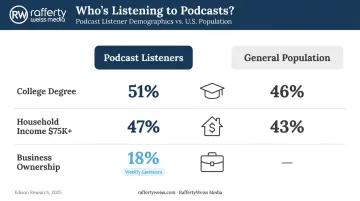
The demographics of podcast listeners align closely well with the clients most advisors want to serve:
- 51% of monthly podcast consumers hold college degrees (vs. 46% of the general population)
- 47% have household incomes above $75,000 (vs. 43% of the population)
- Weekly listeners show 18% business ownership and 56% homeownership rates
These figures come from Edison Research's 2025 Podcast Consumer report — and they describe the affluent, educated audience that professional financial advisors are typically trying to reach.
The Dual ROI of Podcasting
Advisors get two returns from a well-executed podcast:
- Brand authority — consistent publishing builds a searchable, growing body of content that signals expertise to prospects researching you
- Lead pre-qualification — a prospect who listens to six episodes before reaching out is far easier to convert than a cold referral who knows nothing about your philosophy
The second benefit compounds over time. A 50-episode library means a prospect who finds you in month three has just as much to consume as one who found you on day one — your credibility builds even while you're not actively marketing.
Planning Your Financial Advisor Podcast
Define Your Niche First
This is the single most important pre-production decision. A podcast called Money Matters with [Your Name] will struggle to build an audience. A podcast called The Dentist Money Show — a real show from Dentist Advisors reaching thousands of dentist listeners — builds a loyal, commercially valuable audience because it speaks directly to one profession's actual financial concerns.
Niche focus compounds over time. The more specific your topic, the more relevant your content and the easier it becomes for your ideal client to find you.
Other real-world examples:
- Finance for Physicians (Wrenne Financial Planning) — targets doctors navigating personal finances while in practice
- Federal employee specialists like John Mason at Mason & Associates have built practices around narrowly defined niches that support both content and client acquisition
Build Your Content Calendar from Client Conversations
The best episode ideas are already sitting in your CRM. Review meeting notes, recurring questions, and the concerns that come up every tax season or market correction. If three clients asked about required minimum distributions in the last quarter, that's an episode. If every new prospect asks the same onboarding question, that's an episode.
This approach produces content that answers what real prospects are searching for — not what you assume they want to know.
Choose a Format You Can Sustain
Three formats dominate financial advisory podcasts:
| Format | Pros | Cons |
|---|---|---|
| Solo monologue | Minimal scheduling, consistent voice | Demands strong scripting discipline |
| Co-hosted | Natural conversation, easier to sustain | Requires reliable co-host commitment |
| Guest interview | Fresh perspectives, networking value | Scheduling complexity, variable audio quality |
Choose based on what you'll still be doing at episode 100. Early enthusiasm carries a show through launch — what sustains it at year two is a format that fits your actual schedule and working style.
Compliance Is a Pre-Production Step
Financial advisors registered with a broker-dealer or RIA must treat their podcast as a regulated communication. That means compliance involvement before you record a single episode, not after.
Under FINRA Rule 2210, content distributed to more than 25 retail investors within a 30-calendar-day period qualifies as retail communication — requiring principal approval and three years of recordkeeping.
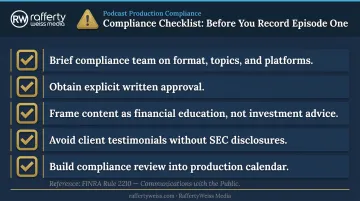
Before recording episode one:
- Brief your compliance team on the format, topics, and distribution platforms
- Get explicit approval — not just informal acknowledgment
- Frame all content as financial education, not specific investment advice
- Avoid client testimonials and third-party ratings without proper SEC Marketing Rule disclosures
- Build a review workflow into your production calendar
Advisors who record first and ask compliance later often end up removing or reediting published episodes.
Episode Length and Cadence
- Target 20–40 minutes per episode — long enough for substantive financial topics, short enough to fit a commute
- Publish weekly or bi-weekly; monthly is too infrequent to build momentum
- Record a backlog of 6–10 episodes before launch to protect against gaps when life interrupts your schedule
Equipment and Production Setup
Starting Out: Minimum Viable Setup
You don't need a professional studio to launch. What you do need:
- USB condenser microphone — options like the RODE NT-USB Mini (
$103), Logitech Yeti ($110–$140), or Audio-Technica AT2020USB-X ($149) deliver dramatically better audio than a built-in laptop mic - Closed-back headphones for monitoring your audio while recording
- A quiet room — no HVAC noise, minimal echo, away from foot traffic. A closet full of clothes is genuinely one of the best DIY recording booths available
- Free editing software — Audacity (free, Windows/Mac) or GarageBand (free, Mac) handle basic editing for new shows
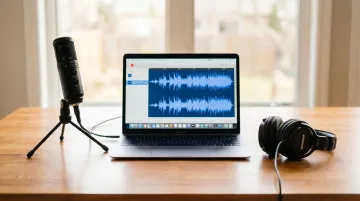
This setup costs under $200 and produces acceptable audio for launch.
Stepping Up: Professional-Quality Output
For advisors serious about audio quality:
- Digital audio interface paired with an XLR microphone (better audio signal, more control)
- Acoustic treatment panels for a home office recording space
- Remote recording platform — Riverside.fm Pro ($24/month billed annually) records both sides of a guest interview in high-quality separate tracks, eliminating the audio degradation that comes from recording over Zoom
- Podcast hosting subscription (Buzzsprout from $15/month, Podbean from $12/month annually, Castos from $19/month) to generate an RSS feed and manage distribution
When to Partner with a Production Company
Some firms are better off outsourcing production entirely. If any of these apply, the time cost of DIY production becomes significant:
- Publishing on a weekly schedule
- Conducting regular guest interviews
- Adding video podcast capability for YouTube or Spotify Video
RaffertyWeiss Media, with over 25 years of corporate media production experience, handles the full production lifecycle: script development, studio and location recording, sound design, mixing, mastering, show notes creation, metadata optimization, and distribution across Apple Podcasts, Spotify, and your owned channels.
Their team has worked with organizations navigating complex compliance and approval processes — including federal agencies and regulated financial entities like Fannie Mae — which applies directly to advisory firms where every episode needs to clear a review workflow before publishing.
When your billable hours outweigh the production budget, outsourcing the entire workflow makes financial sense.
Recording, Editing, and Distributing Your Episodes
Pre-Recording Workflow
Before hitting record on any episode:
- Prepare a structured outline — not a word-for-word script, which makes delivery sound stilted, but a clear point-by-point framework
- Brief guests on the 2–3 key points you want to cover — guests who know the territory give better answers
- Test audio levels with a 30-second clip — catch microphone issues, background noise, and level problems before they contaminate a 40-minute recording
- Record in a consistent environment — the same room, same setup, same time of day produces consistent audio
Editing
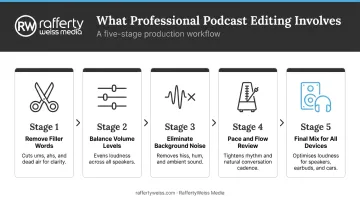
Professional audio editing for a financial podcast involves more than cutting out "ums." A polished episode requires:
- Removing false starts, filler words, and awkward silences
- Correcting volume inconsistencies between speakers
- Eliminating background noise (HVAC cycling, keyboard clicks, dog barking)
- Ensuring natural pacing — good audio editing is invisible to the listener
- Producing a final mix that sounds clean on earbuds, car speakers, and desktop speakers alike
Editing a single 30-minute episode typically takes 2–5 hours for an inexperienced editor. Advisors who absorb that time weekly are trading client relationship hours for audio cleanup. Outsourced editing removes that tradeoff — and the cost is typically far lower than a financial advisor's billable rate.
Hosting and Distribution
Your podcast hosting platform stores audio files and generates the RSS feed that directories use to pull your episodes. Submit that RSS feed to:
- Apple Podcasts (largest directory, critical for discoverability)
- Spotify (fastest-growing, now the #1 podcast platform by listener share)
- Amazon Music / Audible
- iHeartRadio
Most hosting platforms automate multi-directory distribution — you submit once and the platform handles syndication.
Well-written show notes do more work than most advisors expect. Notes with relevant keywords improve search visibility, give first-time visitors context before they press play, and double as ready-made content for blog posts or email newsletters.
Metadata optimization — episode titles, descriptions, and tags — directly affects how findable your episodes are across directories. Treat both as part of the production process, not an afterthought.
Growing Your Audience and Measuring Success
Organic Promotion That Works for Advisors
Paid advertising is rarely necessary in the early stages. What consistently works:
- Email your existing clients when new episodes publish — your current client base is your first and most loyal audience
- Post episode highlights on LinkedIn — the primary social platform where your professional audience spends time
- Cross-promote with niche podcasters and bloggers in adjacent spaces (estate attorneys, CPAs, HR professionals who serve your target demographic)
A 2024 Broadridge survey found that 70% of U.S. advisors with a defined marketing strategy saw increased inbound requests in the prior 12 months, compared to 44% without one. A podcast with a clear content calendar is exactly the kind of defined strategy that drives that outcome.
Metrics That Actually Matter
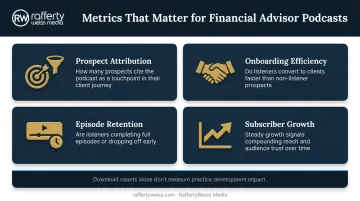
Download counts are a vanity metric when viewed in isolation. Track these instead:
- Prospect attribution — how many new prospects name the podcast as the reason they reached out?
- Onboarding efficiency — do podcast listeners convert faster and require less education at initial consultations?
- Episode retention — are listeners completing full episodes, or dropping off in the first five minutes?
- Subscriber growth — a steady upward trend indicates compounding reach
Set Realistic Timeline Expectations
Podcasting compounds over time, not overnight. Advisors who expect new clients by month three will be disappointed. The ones who treat it as brand-building infrastructure — publishing consistently, refining their niche, growing the episode library — typically don't see meaningful practice development impact until month 12 to 18.
The pattern is consistent: early abandoners almost always cite impatience with results. Advisors who push past that threshold tend to find the episode archive doing ongoing work for them — qualifying prospects, reinforcing expertise, and shortening sales cycles — without additional effort per episode.
Common Mistakes Financial Advisors Make with Podcasting
Avoiding a Niche
The most frequent mistake: trying to appeal to everyone. A show about "general personal finance" competes with hundreds of established, well-resourced podcasts. A show about "retirement planning for emergency room physicians" competes with almost nobody — and every episode is directly relevant to that listener's actual situation.
Specificity feels risky because it narrows your potential audience. In practice, it deepens your relationship with exactly the clients you want.
Publishing Inconsistently
Launching with energy and then going quiet is worse for audience growth than a slow, steady start. Listeners who subscribe expect reliability. Algorithms on Spotify and Apple favor shows with consistent publication cadences. A sporadic publishing history signals to both platforms and listeners that the show may not be worth following.
If weekly is unsustainable, choose bi-weekly and hold that schedule. A listener who finds you reliable will come back. One who finds you sporadic usually won't.
Skipping Compliance Until After Publishing
Some advisors record episodes, publish them, and inform their compliance team afterward. This is the wrong sequence. FINRA Rule 2210 requires principal approval before use, not after. Episodes that haven't cleared compliance review create retroactive liability — and removing published content creates its own complications with platform distribution records.
Build compliance review into your production calendar from the start. Two content strategies that make this easier:
- Evergreen, education-focused episodes rarely trigger compliance concerns and stay relevant long after publication
- Avoiding topical market commentary reduces review friction and keeps your back catalog useful to new listeners
Frequently Asked Questions
How much does it cost to start a financial advisor podcast?
Startup costs range from near-zero (smartphone recording + free Audacity software) to roughly $200 for quality entry-level gear. Professionally produced shows with weekly editing, show notes, and distribution management typically run $10,000–$15,000+ annually depending on scope and production partner.
How often should a financial advisor publish new podcast episodes?
Weekly or bi-weekly is optimal for audience growth. More important than frequency is sustainability — a schedule you can maintain for years beats an ambitious publishing pace you'll abandon after six months.
Do financial advisors need compliance approval before starting a podcast?
Yes. Advisors registered with a broker-dealer or RIA must obtain compliance approval before recording begins. Under FINRA Rule 2210, podcast content distributed to more than 25 retail investors requires principal pre-approval and three-year recordkeeping.
How long should a financial advisor podcast episode be?
20–40 minutes works well for most advisory topics — long enough for substantive discussion, short enough to fit a commute. Consistent episode lengths help listeners plan when they'll finish, which improves completion rates.
How much do podcasts with 10,000 listeners make?
For financial advisors, podcast value comes from client acquisition, not ad revenue. In a niche advisory context, 10,000 targeted listeners represent a high-value audience where a single converted client can mean years of AUM-based fees.
How long before a financial advisor podcast starts generating new clients?
Most advisors report an 18-month-plus runway before a podcast meaningfully influences new business. Those who treat it as long-term brand infrastructure rather than a short-term lead generation tactic consistently see the best results.