That sequence matters. Feeling first, action second. Every video on this list understood that order — and built its entire structure around it.
This is a curated reference of 30 awareness campaign videos selected for one reason: they generated real-world change. Not just views. Not just shares. Documented behavioral shifts, donation records, registration spikes, and policy responses.
If you're a nonprofit communicator, government agency, or corporate team planning an awareness campaign, this list exists to show you the specific storytelling choices — emotional triggers, narrative structures, production techniques — that separate videos that go viral from videos that actually move people.
Key Takeaways
- An awareness campaign video shifts perception and inspires action around a cause — it doesn't sell a product or explain a feature.
- These 30 videos span five categories — from Health & Human Rights to Corporate Purpose & Community — covering the full range of cause-driven storytelling.
- The most effective examples use one of three structures: emotional storytelling, problem-solution framing, or aspirational identity.
- Measurable impact — donor registrations, policy changes, donation records — is what separates a great awareness video from a merely popular one.
What Makes an Awareness Campaign Video Actually Drive Change
The Definition (and What It's Not)
An awareness campaign video has one job: make an audience understand, care, and feel compelled to act — without a hard sell. It is not a product explainer or a testimonial reel — and dressing up a promotional video in cause language doesn't make it one.
The distinction matters because conflating awareness with promotion undermines both. When a viewer senses they're being sold to inside what presents itself as a cause video, trust collapses immediately.
Two Objectives — Choose One
Most awareness videos fail not in production, but in strategy. Before a single frame is shot, the team needs to choose between two campaign objectives:
A single core conflict introduced within the first five seconds 2. A clear emotional pivot — visualized, not just stated (a color shift, a silence, a reversed perspective) 3. A specific, low-friction call to action the viewer can complete in under 60 seconds
Production Quality as a Trust Signal
Viewers judge a cause's credibility partly by how polished the video looks. A poorly produced video about a serious issue undermines the message before it lands. Simplicity can absolutely be high-quality — what matters is intentional production that matches the weight of the subject.
30 Awareness Campaign Videos That Inspire Real Change
These videos were selected based on one criterion: demonstrable real-world impact, whether measured by donation spikes, registration increases, policy changes, or documented behavioral shifts. Each entry identifies the core technique used and notes impact where data is publicly available.
Note: All impact figures cited below are sourced from publicly available campaign reports, news coverage, or organizational annual reports as noted.
Health & Human Rights
1. "Give Me a Heart" — Donate Life America (2016) Technique: Direct-to-lens patient testimonials Launched in June 2016 as part of the White House Organ Summit, this campaign used unbroken eye contact between patient and viewer to create moral accountability. When someone looks directly into the camera and says they need a heart to live, there is no comfortable distance. The technique forces the viewer into the emotional position of the person asking. Donate Life America partnered with Ogilvy & Mather and Instagram to drive donor registration through this campaign.
2. "#ThatsNotLove" — One Love Foundation Technique: Cinematic push-in with low-string soundtrack This campaign built psychological dread through camera movement and sound design rather than explicit depiction — making viewers feel the claustrophobia of an abusive relationship rather than simply watching it. The campaign covered eight warning signs of unhealthy relationships and reached nearly 400 colleges and 150 high schools through its accompanying Escalation workshop program. It was recognized by the Shorty Awards.
3. "Real Beauty Sketches" — Dove (2013) Technique: Objective third-party externalization A forensic sketch artist drew women first as they described themselves, then as a stranger described them. The gap between the two portraits did the emotional work that no script could. According to Dove's own reporting, the video accumulated more than 114 million views, was uploaded in 25 languages across 33 Dove YouTube channels, and reached audiences in over 110 countries — earning Ogilvy Brazil the Cannes Lions Titanium Grand Prix.
4. "#LikeAGirl" — Always / P&G (2014) Technique: Age-group casting comparison By asking adults and then young girls to perform the same action "like a girl," the video made cultural conditioning visible in real time. The moment a ten-year-old runs full-speed and a twenty-something mimes weakness, the argument is made without commentary. The campaign won the Cannes Lions PR Grand Prix and was built on research showing more than half of women experienced a confidence decline at puberty.
5. Patient Gratitude Campaign — ConnectiveRx Technique: Typographic animation with diverse patient voiceover Rather than featuring a single spokesperson, this campaign let multiple patient voices narrate their own financial and health relief in sequence — building collective emotional weight through accumulation. The typographic animation format kept production accessible while maintaining visual consistency. For healthcare nonprofits and government agencies working with limited budgets, this model demonstrates that impact doesn't require on-screen talent.
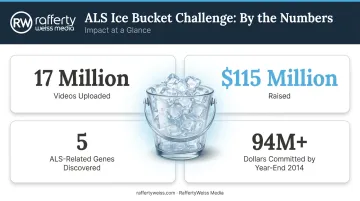
6. ALS Ice Bucket Challenge (2014) Technique: Participatory social mechanics The challenge's genius wasn't the ice water — it was the nomination mechanic that turned every participant into a recruiter. The ALS Association reported that the challenge inspired 17 million people to upload videos and raised $115 million, with over $94 million committed by year-end 2014. The funds later contributed to the discovery of five ALS-related genes, including NEK1, connecting video engagement directly to a scientific outcome.
Environment & Conservation
7. "Worn Wear" — Patagonia (2013) Technique: Long-form values embedding Instead of stating its environmental principles, Patagonia documented ordinary people with extraordinary relationships to their gear. The brand never lectured. Environmental values — durability, anti-consumerism, repair-over-replace — were embedded in the stories themselves. The result positioned Patagonia as aligned with audience identity rather than asking audiences to adopt new beliefs.
8. "What People Get Wrong About Climate Change" — Vox Technique: Mental model reframing By shifting the narrative from "the Earth is dying" to "civilization is fragile," this video bypassed the psychological defensiveness that planet-as-victim framing typically triggers. Fluid line-art animation and a calibrated conversational voiceover made the argument feel like a conversation, not a lecture. A strong model for government and science communicators trying to change an entrenched public mental model.
9. "#BeatPlasticPollution" — UN Environment Programme (World Environment Day 2018) Technique: Celebrity-anchored tag mechanics This campaign transformed passive viewers into active participants through influencer-driven challenge mechanics. India, as host nation, pledged to eliminate single-use plastics by 2022 as part of its commitment. The "tag-a-friend" structure converted audience reach into networked participation across millions of users.
10. "The Lonely Dodo" — Durrell Wildlife Conservation Trust (2013) Technique: Universal emotion applied to non-human subject Produced with Aardman Animation and voiced by Stephen Fry, this four-minute film made species extinction emotionally accessible by using loneliness — something every viewer has felt — as the entry point. The animation format allowed a non-human subject to carry genuine emotional weight without anthropomorphic distortion.
11. "What Really Happens to the Plastic You Throw Away" — TED-Ed Technique: Knowledge-gap closure Rather than using alarm, this animated video traced the lifecycle of three plastic bottles through the waste system. When people genuinely understand what happens to their discarded plastic, behavioral change tends to be more durable than when fear is the motivator. Skipping scare tactics entirely was a deliberate production decision, not an oversight.
12. "The Giant" — Palau Pledge Technique: Warm reframing of responsibility An inflight animation depicted a tourist as a well-meaning but clumsy giant — too large for the ecosystem around them. Environmental responsibility was taught through warmth and humor rather than shame. The Palau Pledge won a 2018 Silver Clio Award, and Palau became the first nation to issue visas only to tourists who sign an eco-pledge.
Social Issues & Equality
13. "World's Toughest Job" — American Greetings (2014) Technique: Narrative misdirect Framed as a mysterious job interview for a demanding, unpaid position, the video withheld its reveal until viewers were fully invested in the "candidate's" disbelief. The pivot — when the interviewer reveals the job is motherhood — generated the kind of emotional surprise that drives sharing. The campaign won the Effie Awards top prize for American Greetings.
14. "#ThisGirlCan" — Sport England (2015) Technique: Unfiltered authenticity over aspiration Instead of showing polished athletes, this campaign featured real women — sweating, uncertain, imperfect — making sport feel attainable rather than aspirational. Sport England reported that 2.8 million women aged 14–40 did some or more physical activity as a direct result of the campaign, one of the clearest documented behavioral outcomes tied to a single awareness campaign.

15. "Thank You, Mom" — P&G Olympic Campaign Technique: Non-linear flashback structure Starting at the emotional conclusion and working backward, P&G built retroactive context that deepened viewer investment before the brand was ever introduced. The campaign ran across multiple Olympic cycles — London 2012, Sochi 2014, and Rio 2016 — with each iteration extending the emotional vocabulary established in the first film.
16. "It Gets Better" — Dan Savage & Terry Miller (2010) Technique: Direct-address testimony at scale What began as a single YouTube video addressed directly to LGBTQ+ youth experiencing bullying became a platform that aggregated thousands of similar videos from public figures, corporations, and ordinary people. The project grew into a global movement with an official foundation, demonstrating that the most scalable awareness formats are those that invite participation rather than just viewership.
17. UNHCR "My Neighbour" Campaign Technique: Proximity reframing UNHCR's refugee awareness campaigns consistently use geographic and personal proximity as their primary tool — moving the psychological distance between the viewer and the displaced person from "distant crisis" to "someone like you." By placing refugee experiences in the viewer's own cultural context, these campaigns make empathy more accessible.
18. "That's Not Normal" — White Ribbon Campaign (UK Government) Technique: Normalization disruption Government-backed campaigns addressing gender-based violence often face the challenge of depicting abuse without re-traumatizing survivors or desensitizing general audiences. The most effective examples — including the UK's White Ribbon-aligned productions — use behavioral recognition rather than explicit depiction, showing the small normalized moments that precede escalation and asking viewers to reconsider what they've accepted as ordinary.
Public Safety & Civic Education
19. Electrical Exclusion Zone Safety Video — Ergon Energy Energex Technique: Spatial visualization of invisible hazard Minimalist 2D animation rendered electrical exclusion zones as glowing spatial envelopes around infrastructure — making an abstract regulatory boundary viscerally understandable without requiring technical knowledge. This is a replicable model for government agencies communicating safety requirements to non-expert audiences: when the hazard is invisible, the video's job is to make it visible.
20. "Grid Guardians" PSA Animation Technique: Perception reframe through character narrative By centering utility workers as crisis-response protagonists rather than inconvenience-causers, this animation shifted public perception of planned outages from bureaucratic failure to community protection. Giving viewers a human lens for an otherwise frustrating experience reduced complaint-driven pressure on the agency without making a single policy statement.
21. New Zealand Transport Agency "Legend" / "Ghost Chips" Campaign Technique: Peer-to-peer cultural language Rather than lecturing at young male drivers — the demographic most resistant to road safety messaging — the NZTA produced a campaign entirely in their cultural vocabulary. "Ghost Chips" became shorthand for a peer conversation about drunk driving, embedding the safety message in a format the target audience authored, not a format imposed on them.
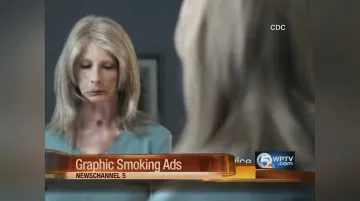
22. CDC "Tips From Former Smokers" PSA Campaign Technique: Unflinching consequence testimony Former smokers described, on camera, the specific physical consequences of their smoking — without euphemism or softening. Peer-reviewed research found the campaign was associated with 16.4 million quit attempts and over 1 million sustained quits among U.S. adults between 2012 and 2018.
Separately, the research found that an average quarterly dose of 1,200 TV gross rating points corresponded to a 3.9 percentage-point increase in quit attempts — a level of measurement precision rare in public health PSA research.
23. FEMA "Ready" Emergency Preparedness Campaign Technique: Scenario-based urgency with low barrier entry FEMA's Ready campaign consistently uses scenario walkthrough — showing what an emergency looks like in a familiar domestic setting — to make abstract preparedness feel immediately actionable. The communication challenge is moving audiences from "that won't happen to me" to "here's what I'd do if it did." The most effective versions reduce the preparation ask to three specific actions viewers can complete before the video ends.
24. CISA Cybersecurity Awareness Month Campaign Technique: Concrete behavior substitution The CISA Cybersecurity Awareness Month toolkit frames digital safety not as technical complexity but as a small set of habit substitutions — use a password manager, enable multi-factor authentication. Replacing jargon with behavioral instructions makes a technically dense subject accessible. Tell people exactly what to do, not why the threat exists.
Corporate Purpose & Community
25. "Crisis at Christmas" — Crisis UK Technique: Cinema-vérité intimacy Rather than depicting homelessness through statistics or distance, this campaign placed the camera at eye level with homeless individuals — revealing their normalcy, their specific humanity, their proximity to the viewer's own experience. Crisis UK's annual report documents the charity raising over £26 million through its Christmas appeal. That figure reflects years of proximity-based storytelling applied to a single recurring campaign.
26. "Secret Agent" Campaign — Adobe Marketing Cloud Technique: Genre narrative as product context Adobe built short spy-thriller films around enterprise marketing challenges, making software-driven problems feel urgent and cinematic. The product receded behind the story. This is the model for B2B awareness campaigns where the audience needs to feel the problem before they'll consider a solution — a principle that applies equally to government communications and nonprofit cause campaigns.
27. "The Story of Content" — Content Marketing Institute Technique: Historical contextualization as authority signal A 45-minute documentary positioning CMI as the authoritative source on content marketing's history. The format choice — long-form documentary over short promotional content — communicated institutional seriousness before a single claim was made. For associations, think tanks, and government agencies, this model establishes credibility through depth rather than frequency.
28. "This Is a Generic Brand Video" — Dissolve (2014) Technique: Meta-commentary audience targeting By satirizing the conventions of generic brand video, Dissolve attracted precisely the audience that would use their stock footage library — marketing professionals who recognized, and were tired of, the clichés being mocked. The Shorty Award-recognized campaign . That distinction shifts how both disabled and non-disabled viewers understand what "accessibility" actually means. The awareness goal isn't to sell software; it's to move the public mental model from accommodation to empowerment.
30. Airbnb "#WeAccept" Campaign (2017) Technique: Value declaration through inclusion narrative Launched during Super Bowl LI, Airbnb's "#WeAccept" used a rapid montage of diverse faces with a simple text overlay to make a brand values statement that required no product mention. The campaign communicated corporate purpose in under 60 seconds and generated significant social discussion. One statement. No elaboration needed.
The Techniques Behind the Most Effective Examples
Three Patterns Across All 30 Videos
1. The Emotional Pivot
Every high-performing video on this list contains a deliberate, aesthetically distinct transition from problem state to solution state — executed through color grade shift, pace change, or typographic reset. The viewer's brain registers the change and prepares for an emotional resolution. The transition does the work that narration never could.
2. Conflict Velocity
High-performing awareness videos introduce their core tension within the first five seconds — unless the brand carries legacy equity that earns the audience's patience. "World's Toughest Job" opened with a job listing. "#LikeAGirl" opened with the phrase itself. The conflict is the hook.
3. Camera Framing as Message
Eye-level and low-angle framing communicates subject dignity. High-angle framing triggers pity — and pity weakens cause credibility. That's why the most effective campaigns in this list use it sparingly, if at all. This Girl Can never shot down at its subjects.
The Sonic Catalyst Pattern
Visual craft is only half the equation. The emotionally effective videos in this list use audio to lead emotion — music peaks one to two seconds before the visual resolution arrives, cueing the viewer to expect a payoff a moment before it lands. This timing is built into the edit deliberately.
The counter-choice — delayed or absent audio — characterizes vérité-style campaigns like "Crisis at Christmas," where silence carries the emotional weight.
Length and Campaign Objective
| Video Length | Best For |
|---|---|
| 15–30 seconds | Recognition — visceral visuals, minimal messaging |
| 30–90 seconds | Recall — brand attributes, values, behavioral cues |
| 5+ minutes | Thought leadership, institutional credibility, depth |
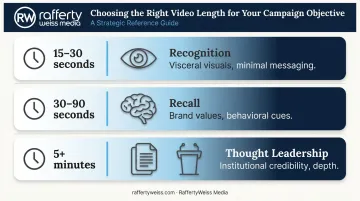
Documentary formats build authority. They don't build reach. Choosing the wrong length for the objective is the most avoidable production mistake in awareness video work.
How to Create Your Own Awareness Campaign Video
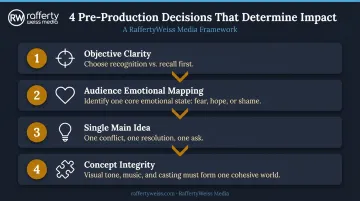
Four Pre-Production Decisions That Determine Impact
1. Objective clarity first. Choose between recognition and recall before anything else. The entire production — length, format, pacing, distribution — flows from that choice.
2. Audience emotional mapping. What does this specific audience fear, hope for, or feel ashamed of? Effective awareness videos engage one of those emotional states authentically, not all three superficially.
3. Single main idea. Awareness videos fail when they try to communicate multiple messages. The CDC "Tips" campaign succeeded because each video made one argument. "#LikeAGirl" made one argument. One conflict, one resolution, one ask.
4. Concept integrity. Every element — color, motion, music, casting — must feel like it belongs to the same world. Inconsistency between visual tone and subject matter is a trust signal failure.
Match Concept Complexity to Budget Before Production
These four decisions narrow the creative field. What narrows it further is an honest look at budget.
The strongest videos in this list were not the most expensive. They were the most precisely executed. A simpler concept done impeccably outperforms an ambitious concept done poorly — every time.
The question to answer before entering production: "Can we execute this concept at the level it requires with the budget we have?" If the answer is no, simplify the concept. Don't compromise the execution.
Nonprofits, federal agencies, and mission-driven organizations face a specific challenge: messaging must be accurate, compliant, and emotionally effective — often simultaneously. That requires a production partner with direct experience navigating those constraints.
RaffertyWeiss Media has spent over 25 years producing awareness campaigns and PSAs for clients including the American Red Cross, the Department of Labor's Office of Disability Employment Policy, the CDC, and HealthCare.gov. Their work has aired nationally in English and Spanish, produced within government review cycles and Section 508 compliance requirements.
Conclusion
Across all 30 videos, the common thread isn't budget, celebrity, or technical production capacity. It's a clear cause, a precisely chosen emotional approach, and execution that matches the gravity of the message.
Each technique shown here works because it fits a specific audience, objective, and moment. The real work is identifying which approach fits yours — then executing it with the care the cause deserves.
If your organization is planning an awareness campaign, build your strategy before you write a single line of script. The video is often the most public, lasting expression of your cause — it deserves that foundation. Contact RaffertyWeiss Media to discuss how to develop an awareness campaign video aligned to your organization's goals and audience.
Frequently Asked Questions
What is an awareness campaign?
An awareness campaign is a coordinated effort to shift public knowledge, attitudes, or behavior around a cause, brand, or issue. Video works as its centerpiece because it combines emotion, information, and a call to action in a format audiences consume and share naturally.
What is an example of a good awareness campaign?
Dove's "Real Beauty Sketches" (114 million views, Cannes Titanium Grand Prix), the CDC's "Tips From Former Smokers" (over 1 million documented sustained quits), and Sport England's "#ThisGirlCan" (2.8 million women more physically active) each succeeded through a single clear emotional message, authentic storytelling, and a measurable outcome tied directly to the campaign.
What makes an awareness campaign video effective?
Three elements appear in most high-performing examples: a single core conflict introduced early, an emotionally distinct pivot moment that is visualized rather than stated, and a specific call to action the viewer can complete within 60 seconds. Production quality matters too — audiences equate execution with cause credibility.
How long should an awareness campaign video be?
Recognition-focused videos run 15–30 seconds and prioritize visceral visuals over messaging. Recall-focused videos run 30–90 seconds and emphasize brand values and behavioral cues. Long-form documentary content (five minutes or more) serves thought leadership and institutional credibility goals, not broad reach.
What is the difference between an awareness video and a promotional video?
Awareness videos build emotional association with a cause, brand, or value, with no direct sales call to action. Promotional videos are built to convert. Treating them as interchangeable dilutes the awareness message and weakens the conversion offer at the same time.
How do you measure the success of an awareness campaign video?
Measure awareness videos by top-of-funnel metrics: impressions, views, watch completion rates, and social shares. When direct behavioral outcomes are trackable (donor registrations, volunteer sign-ups, pledge signatures), those provide the clearest evidence of impact. Sales or conversion metrics don't apply at this stage.