The good news: the 2026 conference calendar is genuinely strong for fundraising and donor engagement professionals. The Fundraising Effectiveness Project reports that donor counts fell 3.6% in 2025 even as dollars raised grew 5% — which means retention, cultivation strategy, and engagement quality matter more than ever. The right conference can compress months of trial-and-error into a few focused days.
This guide covers the 2026 conferences most relevant to fundraising and donor engagement, with practical guidance on how to choose, prepare, and actually implement what you learn.
Key Takeaways
- AFP ICON, Bridge, and the Nonprofit Fundraisers Symposium are the top three conferences for development professionals in 2026
- Start with your 2026 fundraising priorities, then match conferences to dates and budget
- AI-assisted fundraising, multichannel donor journeys, and storytelling strategy dominate 2026 programming
- In-person events deliver stronger networking ROI; virtual options like Generosity Xchange keep costs down for smaller teams
- Build a structured post-event debrief into your plan — that's what turns conference takeaways into actual results
Why Donor Engagement Conferences Still Matter in 2026
Peer-driven conference learning compresses years of trial-and-error into a few days of curated insight. When donor retention sits at 43.3% and your base is actively shrinking, there's no runway for figuring out major gifts strategy or digital acquisition through internal experimentation.
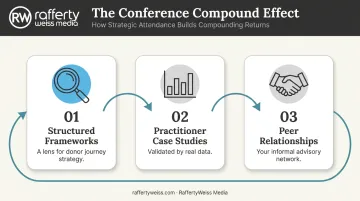
The best conferences deliver three things that self-directed learning doesn't:
- Structured frameworks for thinking about donor journeys, retention, and channel strategy — not just one-off tactics
- Case studies from practitioners who've already run the experiment and have the data to show for it
- Peer relationships that outlast the event and become your informal advisory network
Those three things compound — the frameworks give you a lens, the case studies validate them, and the relationships help you apply them. What's changed in 2026 is that the better events are built around exactly this progression, not just inspiration. When evaluating conferences, look for hands-on workshops, practitioner-led sessions (not vendor presentations), and post-event resource access. An event with a polished agenda but mostly panel discussions may not deliver the same implementation value as a smaller, workshop-heavy summit.
Top Nonprofit Donor Engagement & Fundraising Conferences in 2026
Each conference below centers on donor engagement, fundraising strategy, or development — not as a sidebar track but as the primary programming focus. Entries include audience level, format, and pricing to help you find the right fit quickly.
Spring Conferences
P2P Professional Forum Conference — February 24–26, Baltimore Built entirely around peer-to-peer fundraising: walks, runs, rides, participation growth, and benchmarking. For teams focused on scaling a P2P program, no other conference goes this deep. Registration runs $1,195 (nonprofit members) to $1,295 (nonprofit non-members).
Nonprofit Fundraisers Symposium — March 25–27, Washington D.C. Hosted by DMAW and The Nonprofit Alliance, this event skews toward seasoned professionals (10+ years) and emphasizes practical application over theory. Theme: Aspire, Adapt, Advance. Member rates start at $599; the Erica Waasdorp Scholarship is available for eligible attendees.
AFP ICON 2026 — April 26–28, San Diego The flagship fundraising conference from the Association of Fundraising Professionals draws 3,000+ attendees across all development levels. Programming covers major gifts, legacy giving, donor cultivation, equity in philanthropy, and more across 100+ sessions. With 100+ sessions spanning every development discipline, it's the broadest fundraising event on the calendar. Full-conference pricing runs $599–$2,999 depending on category and timing; multiple AFP Foundation scholarships are available.
Engage for Good Conference — April 21–24, Palm Springs Focused on cause marketing and corporate partnership strategy for nonprofits building revenue through purpose-driven brand relationships. Theme: Purpose With Precision. 750+ decision-makers attend. General pass pricing starts at $2,395, with a $400 discount available for nonprofit professionals.
Summer–Fall Conferences
Bridge to Integrated Marketing & Fundraising Conference — July 29–31, National Harbor, MD Co-hosted by DMAW and AFP/DC, Bridge is the go-to event for teams that want to align fundraising and marketing through data, CRM integration, and multichannel donor journeys. With 125+ speakers across 12 tracks, it serves fundraisers, digital marketers, development directors, and technology staff. The National Harbor location makes it a particularly practical choice for East Coast organizations.
Nonprofit Innovation & Optimization Summit (NIO) — September 22–24, Fort Worth, TX NextAfter's practitioner-focused summit covers digital fundraising growth, testing methodology, donor psychology, and recurring giving strategy. Well-suited for growth-oriented teams focused on data-driven optimization.
Nonprofit Storytelling Conference — October 26–28, Tucson, AZ Dedicated entirely to donor-centered storytelling: appeals, thank-yous, donor reports, and the emotional moments that move people to give. Ticket pricing ranges from $795 to $1,195+ depending on option selected (verify current pricing before registering).
NonProfit POWER — December 1–3, Baltimore An invitation-only hosted summit for senior decision-makers. Tracks cover direct marketing, peer-to-peer, and technology including AI. Free for qualified attendees — worth applying if you're in a leadership role overseeing fundraising strategy.
Generosity Xchange — Virtual (2026 date TBD) Neon One's free virtual conference covering fundraising, marketing, donor management, and data analytics. An accessible option for smaller teams with limited travel budgets; monitor the official Neon One page for 2026 date confirmation.
Key Themes Shaping 2026 Fundraising Conferences
Three themes are driving conference agendas in 2026 — and each one has direct implications for how your team fundraises.
AI Is Moving from Theory to Practice
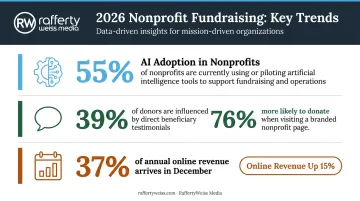
According to the Salesforce 2025 Nonprofit Trends Report, 55% of nonprofits were actively using or piloting AI — up from 12% the previous year. That jump means conference programming has had to keep pace.
At 2026 events, AI sessions cover real implementation: donor segmentation, prospect research, personalized outreach, and retention prediction. When evaluating sessions in advance, skip vendor demos and look for case study presentations from practitioners who've run actual deployments. The questions worth asking:
- What tool did they use, and with what data?
- What changed in donor behavior after implementation?
- What failed, and what would they do differently?
Storytelling as Fundraising Strategy
This isn't a soft topic anymore. Research from CauseVox's 2023 Giving Study found that 39% of donors said beneficiary testimonials would increase their likelihood to give, and 76% were more likely to donate on a professional, branded donation page.
Conferences like AFP ICON and the Nonprofit Storytelling Conference are dedicating more programming to this — specifically, how narrative structure and mission-driven content directly influence donor response rates.
Multichannel Donor Journeys and Year-End Preparation
M+R Benchmarks 2026 reports that nonprofit online revenue grew 15% in 2025, with 37% of annual online revenue arriving in December alone. Sessions on these topics are filling up at every major conference:
- Email automation — building triggered sequences that respond to donor behavior
- Digital acquisition — growing the donor file before year-end pressure hits
- Monthly giving optimization — converting one-time donors into recurring supporters
- Donor journey mapping — connecting touchpoints across channels into a coherent experience
Teams attending these sessions leave with frameworks they can apply to Q4 campaigns before the December rush.
How to Choose the Right Conference for Your Nonprofit
Start with Your Goals, Not the Calendar
Before looking at any event listing, identify your organization's top two or three fundraising priorities for 2026. Those priorities become your filter.
Some practical examples:
- Building a major gifts program → AFP ICON or Nonprofit Fundraisers Symposium
- Scaling a peer-to-peer campaign → P2P Professional Forum
- Launching corporate partnerships → Engage for Good
- Improving digital acquisition and multichannel strategy → Bridge or NIO Summit
- Improving first-time donor retention → AFP ICON, where donor lifecycle sessions are extensive
Match the Event to the Role
Not every conference is right for every team member:
| Role | Best Fit Events |
|---|---|
| Development Director | AFP ICON, Nonprofit Fundraisers Symposium |
| Digital/Marketing Staff | Bridge, NIO Summit |
| Major Gifts Officer | AFP ICON |
| P2P Program Manager | P2P Professional Forum |
| Corporate Partnerships Lead | Engage for Good |
| Senior Leadership | NonProfit POWER (invitation-only) |
In-Person vs. Virtual: A Practical Framework
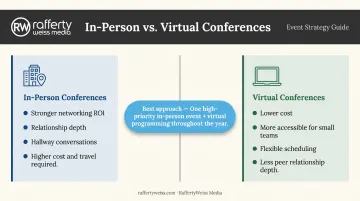
In-person events deliver stronger networking ROI and relationship depth. The hallway conversation with a peer who solved your exact retention problem is hard to replicate on Zoom. Virtual options (Generosity Xchange, NIO Summit's digital resources) are lower cost and more accessible for smaller teams.
The practical recommendation: blend both. Send staff to one high-priority in-person event, and supplement with free or lower-cost virtual programming throughout the year. Don't spread budget thin by sending one person to four events — send two people to one high-priority event. Split the sessions, compare notes afterward, and implement together. That approach consistently outperforms solo attendance.
Budget Reality Check
Registration costs vary significantly:
- Lower-cost options: Generosity Xchange (free), NonProfit POWER (free for qualified attendees)
- Mid-range: Nonprofit Fundraisers Symposium ($599–$799), P2P Professional Forum ($1,195–$1,295)
- Higher investment: AFP ICON ($599–$2,999 depending on category/timing), Engage for Good ($2,395+)
Early-bird registration, member discounts, and conference scholarships can significantly cut costs at AFP ICON, the Nonprofit Fundraisers Symposium, and others. Treat conference attendance as a budgeted line item in your annual development plan — not a discretionary expense that gets cut when money gets tight.
Making the Most of Your Conference Experience
Pre-Conference Preparation
The gap between attendees who return with ideas and those who return with implementation plans is almost entirely explained by what happens before the event.
Before you arrive:
- Review the full agenda and identify 3–5 sessions that directly address your stated priorities
- Write down 2–3 specific challenges you want answered — treat sessions as research, not passive consumption
- Research fellow attendees using conference apps and LinkedIn; identify five people you want to connect with and why
Networking With Intention
Surface-level badge exchanges are a waste of conference time. Prepare a concise organizational pitch — what you do, what you're working on, what you're trying to solve. Ask specific questions: "What's actually working for you in monthly donor acquisition right now?" Use conference networking apps to schedule targeted conversations before the event starts.
Follow up within 48 hours. The connection fades quickly after the closing session.
Post-Conference Implementation
Research on professional development suggests only about 30% of training content gets transferred into actual workplace practice. The antidote isn't motivation — it's structure.
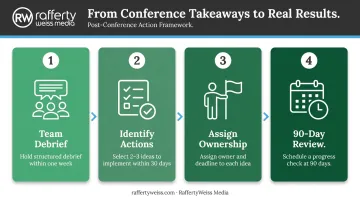
Within one week of returning:
- Hold a structured team debrief (not a casual "how was it?")
- Identify 2–3 actionable ideas to implement within 30 days
- Assign ownership and deadlines for each
- Schedule a 90-day review to assess progress
One area where this framework pays off quickly: storytelling and donor communications. Nonprofits frequently leave AFP ICON or the Nonprofit Storytelling Conference with renewed clarity about how narrative drives giving — and then struggle to produce the content that puts those strategies into practice. Video is one of the most direct formats for closing that gap.
RaffertyWeiss Media has worked with organizations including the American Red Cross, United Way, Fourblock, and Girl Up on fundraising videos, donor campaign pieces, gala impact videos, and PSAs. Their process begins with a discovery phase built around the nonprofit's mission, audience, and fundraising goals — which makes them a practical fit for teams returning from a conference with a content strategy ready to execute.
Frequently Asked Questions
What are the most important nonprofit fundraising conferences to attend in 2026?
AFP ICON (April, San Diego), the Bridge Conference (July, National Harbor), and the Nonprofit Fundraisers Symposium (March, D.C.) are the strongest picks for fundraising-focused professionals. The right choice ultimately depends on your team's role and your organization's top development priorities for the year.
How do I choose the right nonprofit conference for my organization?
Start with your 2026 fundraising priorities, not the conference calendar. Match sessions to your specific skill gaps and strategic goals, then factor in format, timing relative to your campaign schedule, and total cost including travel and lodging.
How much do nonprofit fundraising conferences typically cost?
Registration fees range widely: free for qualified attendees (Generosity Xchange, NonProfit POWER) up to $599–$2,999 for AFP ICON depending on category and timing. Early-bird pricing, member rates, and scholarships at events like AFP ICON and the Nonprofit Fundraisers Symposium can significantly reduce the investment.
What topics are covered at donor engagement conferences in 2026?
Core themes include AI-assisted fundraising, major gifts strategy, peer-to-peer campaign growth, donor-centered storytelling, and data-driven retention approaches. Digital fundraising and year-end campaign planning appear prominently across multiple events.
How can nonprofit leaders measure ROI from attending a conference?
Track specific goals set before attending, count actionable ideas implemented within 90 days, and document new contacts or partnerships that emerged from the event. Six-month metrics on targeted priorities — retention rate, monthly donor growth — give you the clearest signal of what actually moved.
What should nonprofits do after attending a fundraising conference?
Within the first week, take three concrete steps:
- Debrief with your team to surface the most actionable takeaways
- Assign 2–3 ideas to specific owners with 30-day deadlines
- Follow up with key contacts before 48 hours have passed
Then schedule a 90-day review to confirm implementation actually happened.