A rushed hire or a mismatched vendor can turn a straightforward training video or PSA into a costly do-over. This guide breaks down what a video production partner actually does, and the specific factors decision-makers should weigh before signing a contract.
Key Takeaways
- A true production partner manages strategy, creative direction, filming, and editing, not just camera operation.
- Portfolio relevance, communication process, and overall value matter more than chasing the lowest quote.
- Long-term partnerships build brand consistency and cut onboarding time compared to one-off vendor hires.
- Video budgets swing widely based on complexity, so upfront clarity prevents scope surprises later.
What Is a Video Production Partner?
A video production partner is a team that manages the full video creation lifecycle: strategic planning, creative direction, filming, editing, and final delivery. It's a different relationship than hiring someone to simply show up with a camera.
Types of Video Production Partners
Not every provider offers the same scope of service. Understanding the differences upfront saves time during vetting:
- Freelancers — Solo videographers or editors who work well for simple, lower-budget projects like a single testimonial or a short social clip.
- Video production companies — Full teams offering end-to-end production and creative services, built for corporate, government, and nonprofit content that needs strategy behind it.
- Agencies — Marketing-first teams that bundle video into broader advertising and campaign strategy, useful when video is one piece of a larger media buy.
What a Full-Service Partner Typically Handles
A full-service partner covers five connected stages—discovery, scripting and storyboarding, production, post-production, and delivery—along with creative direction and distribution guidance for the finished asset.
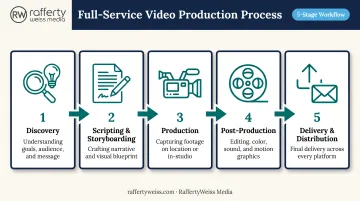
Organizations with recurring communication needs (annual reports, training refreshers, seasonal campaigns) benefit most from a partner who owns this entire arc. Handing off pieces of a project to separate vendors (one for filming, another for editing) tends to create gaps where messaging or brand consistency slips through.
Why the Right Video Production Partner Matters
A skilled partner brings storytelling expertise and technical execution that most in-house teams or low-cost freelancers simply can't match on their own. That combination is what separates a video that gets watched and acted on from one that gets skipped after ten seconds.
The cost of getting this wrong isn't abstract, either. Revision cycles alone can add one to two days per round. Final feedback loops can stretch a timeline by two to four weeks, according to Pixelab Studios' 2024 production timeline guide. Multiply that across a project with a wrong-fit vendor, and a "quick" video turns into a months-long headache.
For regulated or public-facing organizations, the stakes climb higher. Federal agencies producing prerecorded video content must provide captions and, in many cases, audio description, under accessibility requirements outlined by Section508.gov. Healthcare organizations face a separate layer of scrutiny around patient privacy and messaging review.
A few consequences of picking the wrong partner:
- Reshoots that eat into budget and timeline
- Missed deadlines around board meetings, campaign launches, or compliance windows
- Messaging that technically looks polished but misses regulatory or brand requirements
What to Consider When Choosing the Right Video Production Partner
The right partner aligns with your sector, your goals, and how your organization actually works day to day—not the flashiest demo reel alone. The factors below connect vetting criteria to outcomes you can measure: cost control, timeline adherence, and message clarity.
Relevant Portfolio and Sector Experience
Reviewing full projects, not just a highlight reel, in a similar sector reveals whether a partner can actually handle your messaging needs. A production company that's built PSAs for a federal labor agency understands compliance review in a way a wedding videographer never will.
This matters for two reasons: it shows creative fit, and it shortens the learning curve on your first project together. A partner who's already produced training content, eLearning modules, or public-facing campaigns for organizations like yours won't need a crash course in your world before work can start.
Team Expertise, Equipment, and Technical Capability
The people behind the camera matter as much as the camera itself. A team's composition—producers, directors, editors, motion graphics specialists—directly affects the range and quality of deliverables that are actually possible.
A lean two-person crew can handle a simple interview shoot. A multi-location cinematic piece with animated graphics needs producers coordinating logistics, editors managing footage, and a motion graphics specialist building custom visuals. This team depth also affects turnaround speed on complex projects: more specialized hands usually means faster post-production without sacrificing quality.
Communication Process and Project Management
A clear intake process, a single point of contact, and scheduled milestone check-ins prevent scope confusion before it starts. This factor directly influences on-time delivery rates and how many revision cycles a project needs.
Ask potential partners:
- Who is my point of contact once the contract is signed?
- How often will we check in during production and post-production?
- What happens if my organization needs an extra approval round (common for federal or nonprofit clients)?
Vague answers here are a warning sign. Clear answers, ideally naming a specific project manager, are a good sign.
Budget Transparency and Value
Understanding what's actually included in a quote (crew size, number of revisions, licensing terms) matters more than chasing the lowest number on the page. Two quotes for the "same" video can differ by tens of thousands of dollars depending on what's baked in.
Published industry benchmarks give a useful starting point for budgeting conversations:
| Video complexity | Typical starting cost | Source |
|---|---|---|
| Documentary-style, on-camera interviews | Starts around $4,000 | Lemonlight, 2025 |
| Scripted, with talent and locations | Starts around $8,000 | Lemonlight, 2025 |
| Multi-location cinematic productions with large crews | $40,000+ | Capture Video & Marketing, 2026 |
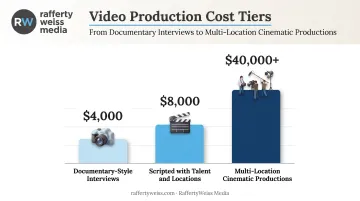
These are published agency benchmarks, not universal averages, so treat them as a reference point rather than a quote. Ask any partner to break down crew size, deliverables (rough cut, fine cut, final cut), and revision policy before comparing numbers side by side.
Cultural Fit and Collaborative Approach
A partner who understands your brand voice and mission communicates more efficiently, and the resulting content feels authentic instead of generic. This shows up early: does the partner ask about your goals and audience before talking about cameras and lighting?
That discovery-first sequence matters. A partner who leads with a consultation about your organization's mission, audience, and message, before proposing shot lists, is signaling that the creative work will actually reflect your brand. That approach builds stakeholder buy-in and cuts revision rounds, since fewer surprises surface once footage comes back.
Long-Term Partnership Potential
A partner who can grow with your organization across multiple projects builds brand consistency over time. Repeat collaborations also require less re-briefing and onboarding on each new project, which translates into real cost efficiency down the road.
Look for evidence of repeat client relationships in a portfolio, not just a single flagship project. A production company that's worked with the same organization across multiple years or content types has already proven it can maintain quality and rapport at scale.
How RaffertyWeiss Media Can Help
RaffertyWeiss Media has spent over 25 years producing video that informs, persuades, and performs for corporate, government, and nonprofit organizations. The Washington, D.C.-based team has built its reputation on messaging accuracy as much as production quality, which matters most when the audience includes regulators, patients, or the public.
The company's collaborative, full-service model covers strategic planning, creative direction, production, and final delivery. A stable team of producers, project managers, and editors leads each project—not a rotating cast of freelancers. Clients have included:
- American Red Cross
- Lockheed Martin
- Georgetown University
- HealthCare.gov
- Gallup
What sets the approach apart:
- Over 25 years of hands-on production leadership, with owner and director Patrick Rafferty involved from strategic planning through final delivery on every project.
- PMP-certified project management, led by Jonathan Stein, keeping multi-phase corporate and government productions on schedule and within scope.
- A reputation for messaging accuracy suited to regulated and public-facing organizations, including federal agencies and healthcare clients navigating compliance review.
When you evaluate partners, use the factors in this guide as a practical checklist: portfolio relevance, team depth, communication process, budget transparency, cultural fit, and long-term potential. Bring that list to a consultation and compare how each studio measures up.
Conclusion
The right video production partner is the team whose experience, process, and communication style genuinely align with your organization's priorities. Popularity and the lowest bid matter far less than that fit.
That decision also isn't permanent. Reassessing fit periodically—especially as your goals, audience, or budget evolve—keeps your video content performing instead of coasting on past success.
Use the factors covered here as a working framework for your next vetting conversation. Ask pointed questions before you sign anything.
Frequently Asked Questions
How much should a 3-minute video cost?
Costs vary widely based on complexity, from simple interview-style videos starting around $4,000 to multi-location productions with animation reaching $15,000–$50,000+. Request detailed quotes that break down what's actually included before comparing prices.
What's the difference between a video production company and a freelancer?
Freelancers typically handle simpler, single-role tasks like filming or editing alone, while production companies offer full teams covering strategy, filming, and post-production. Complex or recurring projects usually benefit from the broader team structure.
How long does the video production process typically take?
Timelines depend on complexity, but a standard corporate video moves through pre-production, filming, and post-production over roughly 4 to 6 weeks. Review and revision cycles can add another 1 to 4 weeks, so build that into your planning.
Should I choose a local video production partner or a national one?
Local partners often understand regional audience expectations and offer easier in-person collaboration, which matters for government and community-focused content. Many production companies also maintain national crews, giving you local knowledge with broader reach when needed.
What should be included in a video production contract?
Look for clear deliverables, timeline, payment schedule, revision policy, and footage ownership terms. Contracts should also specify licensing terms for any music, voiceover talent, or third-party assets used in the final video.
How do I know if a video production company understands my brand?
A strong partner asks about your goals and audience before discussing equipment or shot lists. Their past work should also reflect storytelling that aligns with client missions, not a one-size-fits-all visual style.